


Picture this. You’re typing an email about a landlord who kept your deposit. Your fingers freeze over the keyboard.
Is it suing or sueing? Take a breath. It’s suing, and sueing is a spelling error in both American English and British English.
Quick Answer
Suing is the correct spelling. You take the base verb sue, drop the silent e, and add ing.
Sueing never appears in standard English dictionaries. If you’ve typed it before, you’re in good company. Plenty of confident writers slip on this one.
How Do You Spell Sue as in Suing a Company?
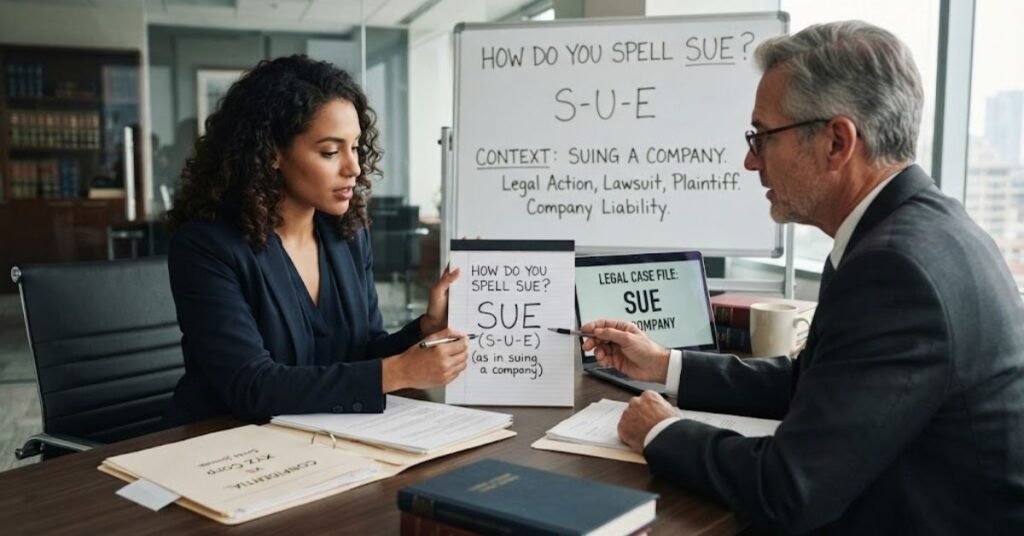
The base verb is spelled S-U-E. That part stays simple.
When you add the -ing form, the final e disappears. So you get “she is suing a company over hidden fees.”
What Is Meant by Sueing?

Nothing, honestly. Sueing isn’t a word.
It’s a misspelling that happens when writers keep the final e out of habit. Spellcheck will flag it every time.
Is Suing the Right Word?
Yes, it is. Suing is the present participle of sue.
You’ll spot it in news reporting, business writing, and legal reports. Anywhere someone takes legal action, suing shows up.
How Do You Spell Suing as in “I’m Suing You”?
Five letters: S-U-I-N-G. That’s the whole trick.
So “I’m suing you” is right. “I’m sueing you” would make any editor wince.
Why People Confuse Them
Blame the eyes. Three vowels in a row, like u, i, and n’s neighbor, look odd on the page.
Also, some verbs do keep their e. Once you’ve seen dyeing or singeing, sueing feels like it could be real too.
Key Differences At A Glance
| Feature | Suing | Sueing |
| Status | Correct form | Incorrect spelling |
| Grammar role | Present participle and gerund | None |
| Found in dictionaries | Yes | No |
| Used in legal writing | Yes | Never |
Meaning And Usage Difference
Only one of these two carries meaning. The other is just a typo wearing a costume.
What Does Suing Mean?
Suing means filing a lawsuit or bringing a claim against someone in court. It covers a civil action where you want compensation, damages, or a refund.
For example, a customer might be suing a contractor after a botched kitchen job.
What Does Sueing Mean?
Sueing means nothing. No dictionary lists it, and no style guide accepts it.
Treat it as a spelling mistake and fix it on sight.
Why Suing Drops The E
English has a tidy spelling pattern here. When a verb ends in a silent e, that e steps aside before a vowel-ending suffix like ing.
Think make → making, use → using, take → taking, and write → writing. Sue − e + ing = suing. Same spelling formula.
When English Keeps The Final E
Some verbs hold on to that e for a reason. Dye becomes dyeing so it doesn’t collide with die → dying.
Singe becomes singeing to protect the soft g sound. Age can be aging or ageing, depending on regional spelling. Sue has no such problem, so the e goes.
Forms Of The Verb Sue
Here’s the full set of verb forms you’ll need. Keep this list handy.
- Sue (base): “They plan to sue.”
- Sues (third person): “She sues the company.”
- Sued (past tense and past participle): “He sued the company.”
- Suing (present participle): “They are suing.”
You’ll also see have sued, is suing, are suing, was sued, being sued, and have been sued.
How To Use Sue In A Sentence
Sue is flexible, but each sentence pattern has its own feel. Let’s walk through four.
Sue Someone Or An Organization
This is the simplest pattern. You sue someone directly, or you sue an organization.
“She’s suing the landlord.” “They’re suing the government.”
Sue For Something
Here, you name what you want. That could be compensation, damages, or a refund.
For example, “He’s suing for a refund after the store ignored his warranty.”
Sue Over Something
This pattern names the dispute itself. It works well for a contract dispute or a disagreement over rights.
“The two firms are suing over a contract.” Simple and clear.
Sue Someone For Something
Now combine both pieces. You name the person and the reason.
“She’s suing the employer for discrimination.” “They’re suing the supplier for breach of contract.”
Pronunciation
Suing has two syllables: SOO-ing. The vowel glides smoothly from oo into ing.
Most American accents and British accents say it the same way. Read it out loud once, and you’ll hear why the e isn’t needed.
Suing vs Sewing
These two look alike but live in different worlds. Sewing means stitching fabric with a needle and thread, like a tailor hemming a dress.
It’s pronounced SOH-ing, not SOO-ing. So “she’s suing her tailor” and “she’s sewing her dress” mean very different things.
Tone, Context, And Formality
Suing works in every setting. It fits casual conversation, everyday writing, and formal legal writing equally well.
In casual talk, people say “I’ll sue!” as a joke. In professional writing, you might swap it for pursuing legal action or commencing legal proceedings.
Which One Should You Use?
Use suing. Every time, in every context.
There’s no regional exception, no style guide loophole, and no situation where sueing wins.
When One Choice Sounds Wrong
Sueing looks wrong everywhere. A legal discussion with that typo instantly loses credibility.
Imagine a business content page about contracts with “sueing” in the headline. Readers would stop trusting the advice right there.
Common Mistakes And Quick Fixes
Most errors come from a few repeat offenders. Here’s how to catch them.
Keeping The Silent E
Writers type sueing because they hold on to the e. The fix is easy: remove the final e before adding ing.
Writing Suuing
Some people double the u by accident. It happens when typing fast.
Check the middle. Suing has one u, followed by i.
Writing Swing Instead Of Suing
Swing is a real word about movement, like a playground swing. It has nothing to do with legal claims.
Autocorrect sometimes pushes this swap. Reread before you send.
Confusing Suing And Sewing
These two sound different, but writers mix them when typing quickly. Remember that sewing needs a needle, and suing needs a courtroom.
Using Sued As The Present Participle
“She is sued the company” is wrong. Sued is the past tense.
Use is suing for what’s happening now. Use sued for what already happened.
Adding Against After Sue
“They sued against the company” sounds off. Sue already carries that meaning.
Just say “They sued the company.” Cleaner and correct.
Everyday Examples
Seeing real sentences helps this stick. Try reading each one out loud.
Examples With Suing
- “The family is suing the manufacturer over a faulty heater.”
- “He’s suing the contractor for unfinished work.”
- “Are they really suing each other over a fence?”
Examples With Other Forms Of Sue
- “She sued her former employer last spring.”
- “He sues whenever someone copies his artwork.”
- “They have sued the company twice already.”
Correcting Sueing
Wrong: “I’m sueing the airline.” Right: “I’m suing the airline.”
Wrong: “They’re sueing for damages.” Right: “They’re suing for damages.”
Dictionary-Style Word Details
Here’s how a dictionary would break it down. Use it as a quick reference.
Verb
Sue is a verb meaning to take legal action against a person or group. Its forms are sue, sues, sued, and suing.
Noun
Suing isn’t a noun on its own, but the gerund works like one. “Suing is expensive” uses it as a subject. The related noun is lawsuit.
Synonyms
Common synonyms include filing a lawsuit, taking legal action, bringing a claim, going to court, and litigating. You can also say filing a civil action or pursuing a claim.
Example Sentences
“She’s pursuing a remedy through civil action.” “The tenant is suing the landlord for repairs.”
Word History
The etymology points to the Latin root sequi, meaning to follow, passed through Old French. That’s why sue also once meant to pursue or follow.
Phrases Containing
Handy phrases include sue for damages, sue for peace, threaten to sue, and right to sue. Each one still uses the same verb pattern.
What Happens After Someone Starts Suing?
Suing rarely ends with a dramatic courtroom verdict. Many cases end in settling, where both sides negotiate and reach an agreement.
Others end by dropping a claim, withdrawing a lawsuit, or a judge dismissing a claim. This article is about spelling, not legal advice, so talk to a lawyer for real cases.
How To Remember Suing vs Sueing
Here’s a mini rhyme. “When ing comes along, the e is gone.”
Another trick: picture the e hopping off a bus as ing climbs on. Silly, but it works.
Quick Self Check Before You Publish
Run through this list before hitting send.
- Did you drop the silent e before adding ing?
- Did you use sued only for past events?
- Did you avoid swing and sewing by accident?
Conclusion
The correct spelling is suing. Sueing is always a misspelling, no matter the context.
Keep the silent-e rule in mind, and you’ll get it right from now on. Got a tricky spelling question of your own? Drop it in the comments, and share this with a friend who keeps typing sueing.
FAQs
Is it suing or sueing?
It’s suing. Sueing is an incorrect spelling.
Why does suing drop the e?
The final e is silent and steps aside before ing. It follows the same rule as making and using.
How do you spell suing someone?
Spell it S-U-I-N-G. For example, “suing someone for damages.”
What is the past tense of sue?
The past tense is sued. The past participle is also sued, as in “have been sued.”
What is the difference between suing and sewing?
Suing means taking legal action. Sewing means stitching fabric with needle and thread.
Can suing function as a noun?
Yes, as a gerund. “Suing takes time” treats it like a noun.
Is It Sueing In British English?
No. British English also uses suing. Only ageing-type words differ by region.
Is Someone Suing Or Being Sued?
The one filing the legal claim is suing. The person being sued is the defendant.

Arthur Whitmore is a passionate grammar enthusiast and language writer at Hexobrust.com. He creates clear, helpful content on grammar, spelling, and everyday English to make learning simple and enjoyable.
