

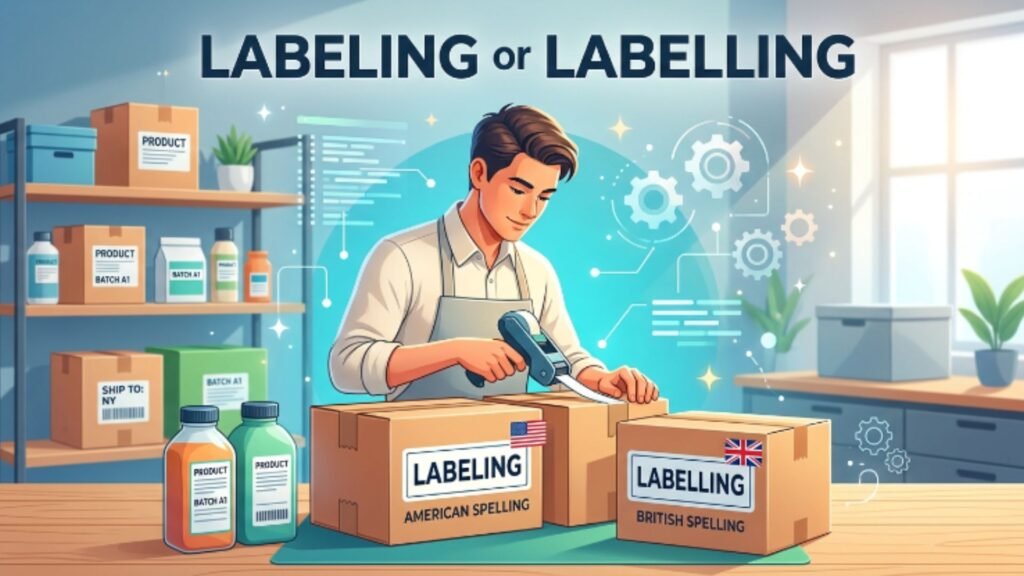
One extra letter can make even confident writers stop and wonder: is it labeling or labelling? You may have seen both spellings online, in books, or in professional documents. That can make choosing the right one feel surprisingly tricky. Fortunately, there is no hidden difference in meaning or pronunciation. Both words describe the same action. The real distinction comes down to where and how you use English.
When choosing between labeling or labelling, your audience should guide you. American English uses labeling, while British English prefers labelling. The same regional pattern also affects related forms such as labeled and labelled. Neither version is more formal or more correct than the other. You simply need to follow the appropriate spelling convention and stay consistent. This guide covers the meaning, correct usage, common mistakes, and practical examples you can use with confidence.
Quick Answer
Both labeling or labelling are correct spellings. The difference depends on which type of English you use.
Labeling is the preferred spelling in American English and US English. Labelling is the standard spelling in British English and UK English.
The meaning does not change. Their pronunciation also remains the same.
- US English: label, labeled, labeling
- UK English: label, labelled, labelling
For example:
American English:
“We are labeling every box before the move.”
British English:
“We are labelling every box before the move.”
Both sentences mean exactly the same thing. The only difference is the regional spelling convention.
If you write for an American audience, use labeling. If your readers follow British English, use labelling. The key is simple: pick one spelling style and stay consistent throughout your writing.
Why People Confuse Them
Many writers get confused because both spelling forms appear online. You might see labeling in one article and labelling in another.
Neither writer is necessarily wrong.
The confusion usually comes from differences between American English and British English. Both varieties share the base word label, but they treat some endings differently.
People also encounter both forms through:
- International websites
- Books and academic writing
- Spell-check programs
- Social media
- Government documents
- Technical documentation
Someone in the United States may think labelling looks incorrect. Meanwhile, a British reader may find labeling unfamiliar.
That is why context matters.
When deciding between labeling or labelling, ask yourself who will read your work. Your audience, publication, or house style should guide your choice.
One L Or Two?
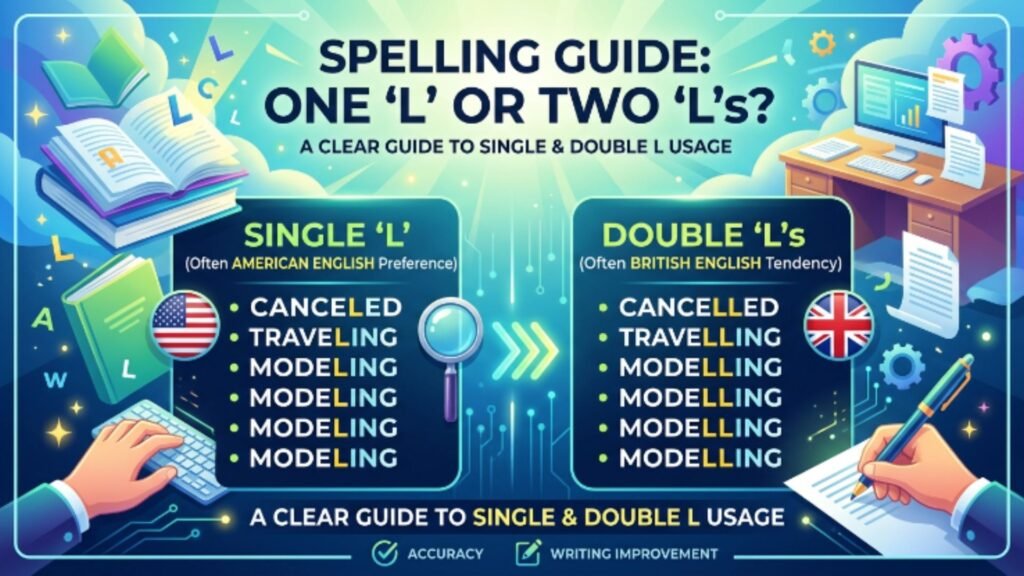
The main difference appears when you add endings to the word label.
In American English, writers usually use one l before the ending:
- Label
- Labeled
- Labeling
In British English, the final l is usually doubled:
- Label
- Labelled
- Labelling
This spelling pattern causes most of the confusion.
For example:
US English:
“The team is labeling the files.”
UK English:
“The team is labelling the files.”
Both sentences describe the same action.
The difference is not about grammar or meaning. It is simply a regional spelling convention.
A useful way to remember it is that British English often doubles the final l in similar words. You may also see patterns like travelling instead of traveling.
When choosing between labeling or labelling, follow the spelling style used by your audience.
Both Forms Sound The Same
Here is the easy part: labeling and labelling have the same pronunciation.
Adding an extra letter does not change how people normally say the word.
For example, these sentences sound the same when spoken aloud:
US: “She is labeling the packages.”
UK: “She is labelling the packages.”
You cannot usually tell which spelling someone uses just by hearing them speak.
This is why pronunciation cannot help you choose the correct form. Instead, you need to consider the variety of English you are writing.
The spelling difference exists only on paper or a screen.
Whether you use labeling or labelling, the reader understands the same action. The choice comes down to American English versus British English.
Spell-Check Settings Can Add Confusion
Your spell-check settings can make labeling or labelling seem incorrect even when both forms are valid.
A document set to US English will often prefer labeling and flag labelling.
A document set to UK English may do the opposite.
For example:
- Microsoft Word set to US English: labeling
- British English settings: labelling
- US style guide: labeling
- UK publication style: labelling
This does not mean the flagged spelling is universally wrong.
Your spell-check simply follows a selected language setting.
Before changing a word, check your document’s language preferences. Also consider the publication’s house style.
Spell-check tools can catch mistakes, but they do not always understand your intended audience. You should make the final spelling decision based on the English variety you are using.
Key Differences At A Glance
The difference between labeling or labelling is easy to understand once you compare them side by side.
| Context | Preferred Spelling |
| American English | Labeling |
| British English | Labelling |
| US English website | Labeling |
| UK English publication | Labelling |
| US academic writing | Labeling |
| British business documents | Labelling |
| Official title | Keep the original spelling |
Here is the full spelling pattern:
- Base word: Label
- US past tense: Labeled
- UK past tense: Labelled
- US -ing form: Labeling
- UK -ing form: Labelling
The two forms share:
- The same meaning
- The same pronunciation
- The same grammatical purpose
Only the spelling convention changes.
If you write for American readers, labeling is usually the safest choice. For British readers, use labelling.
Meaning And Usage Difference
There is no difference in meaning between labeling or labelling.
Both words come from the verb label. They can describe adding information to something or placing something into a category.
The word appears in many everyday situations.
For example, you might use it when:
- Tagging boxes
- Marking products
- Identifying files
- Categorizing data
- Classifying information
- Describing people or groups
The spelling changes depending on the region, but the meaning stays the same.
A company can discuss product labeling in American English. A British company may call the same process product labelling.
The action does not change.
The word can also have a figurative meaning. For instance, labeling someone as lazy means describing or classifying that person in a certain way.
Attaching Or Providing A Label
The most common meaning involves attaching identifying information to something.
You might label:
- Boxes
- Files
- Packages
- Storage containers
- Products
- Equipment
For example:
American English:
“The workers are labeling every package before shipment.”
British English:
“The workers are labelling every package before shipment.”
Both sentences describe the same task.
Labeling can make items easier to organize, identify, and track. A warehouse may use package labeling to prevent shipping mistakes.
An office might use labels to organize documents.
The process may involve tagging, marking, or identifying an object.
Whether you choose labeling or labelling depends on your regional spelling style. The physical action remains exactly the same.
Providing Product Information
Labeling or labelling also plays an important role in product information.
Companies use labels to provide details about what they sell.
Common examples include:
- Food labeling
- Nutrition labeling
- Medication labeling
- Package labeling
- Product labeling
A food package might show ingredients and nutritional facts. Medication labeling may include dosage instructions and safety warnings.
For example:
US English:
“Clear food labeling helps shoppers make informed choices.”
UK English:
“Clear food labelling helps shoppers make informed choices.”
Manufacturing companies also depend on accurate packaging information.
Government and regulatory writing may contain specific labeling requirements. Businesses must often follow rules about how they identify and describe products.
The spelling changes by region, but the purpose remains clear: give consumers useful and accurate information.
Classifying Or Describing Someone
Labeling or labelling does not always involve a physical sticker or tag.
Sometimes, the word describes placing a person, idea, or group into a category.
For example:
“Labeling someone after one mistake can be unfair.”
Here, nobody is physically attaching a label. Instead, someone is categorizing or describing another person.
This type of labeling can involve:
- Classifying behavior
- Categorizing groups
- Describing personalities
- Assigning stereotypes
- Identifying social roles
For example:
“She avoided labelling him as irresponsible after one mistake.”
The figurative meaning works the same way in American English and British English.
However, this use can sometimes carry a negative tone. Labels may oversimplify people or situations.
Context matters. Describing something accurately is helpful. Unfairly categorizing someone can create misunderstanding.
Tone, Context, And Formality
Neither labeling nor labelling sounds more formal or professional.
The difference has nothing to do with tone.
You can use either spelling in:
- Academic writing
- Business documents
- Technical documentation
- Government writing
- Manufacturing records
- Professional reports
The correct choice depends on your regional spelling convention.
For example, an American company will normally use product labeling. A British organization may write product labelling.
Both sound equally professional.
What matters most is consistency.
Switching between labeling and labelling inside the same document can make your writing look careless. Choose a spelling style before editing.
Your house style should also guide you. Some international organizations follow US English, while others use British English.
In American Writing
In American English, labeling is the standard spelling.
Use it when writing for:
- US websites
- American readers
- US academic writing
- Business documents
- Technical documentation
- Government and regulatory writing
The related forms also follow the American pattern:
- Label
- Labeled
- Labeling
For example:
“Our company is updating its product labeling.”
This spelling fits naturally in US English.
You may also see it in food labeling, medication labeling, and data labeling.
When writing for an American publication, avoid randomly switching to labelling. Consistency makes your work look polished and professional.
If your style guide follows American English, stick with labeling throughout the document.
That simple choice prevents unnecessary spelling confusion.
In British Writing
In British English, labelling is the standard spelling.
Writers in the UK often use the following pattern:
- Label
- Labelled
- Labelling
For example:
“The company is improving its product labelling.”
This spelling works naturally in British publications, business documents, and academic writing that follow UK English conventions.
You may also see:
- Food labelling
- Package labelling
- Data labelling
- Medication labelling
British English commonly uses different spelling conventions from US English in other words too. For example, Colour vs Color follows a similar regional pattern.
The most important rule is consistency.
If your article uses British English, keep labelling and labelled throughout the text. Also preserve the original spelling when using a direct quote or official title.
Consistency Matters More Than Switching Styles
When choosing between labeling or labelling, consistency matters more than personal preference. Both spellings are correct, but mixing them in one document can look messy.
For example, avoid writing:
“The boxes were labelled, and we are labeling the rest.”
This sentence mixes British English and American English spelling conventions.
Use one consistent style instead:
- US English: labeled, labeling
- UK English: labelled, labelling
For American writing:
“The boxes were labeled, and we are labeling the rest.”
For British writing:
“The boxes were labelled, and we are labelling the rest.”
Check your house style before publishing. Consistent spelling makes academic writing, business documents, and technical documentation look polished. Pick one regional spelling system and stick with it from beginning to end.
Which One Should You Use?
The answer depends on your audience. Neither spelling is universally better than the other.
Choose labeling or labelling based on the variety of English your readers expect. Your location is less important than your audience and publication style.
Use labeling when writing primarily for American readers. Use labelling when your content follows British English conventions.
Here is a simple guide:
- US audience: Labeling
- UK audience: Labelling
- International organization: Follow the house style
- Direct quote: Keep the original spelling
- Official title: Preserve the published wording
For example:
“Which spelling should I use?”
The answer is simple: match your audience.
Once you choose a spelling convention, keep it consistent throughout your article, report, website, or other document.
Use Labeling For A US Audience
If your audience is mainly in the United States, use labeling.
This is the standard American English spelling and works well in professional and everyday writing.
Use labeling in:
- US websites
- American schools
- Business documents
- Academic writing
- Government writing
- Technical documentation
For example:
“The company is updating its product labeling.”
You should also use the related American forms:
- Label
- Labeled
- Labeling
Conversation example:
Writer: “Should I use labelling on our US website?”
Editor: “Use labeling. Your audience follows American English.”
This choice also applies to food labeling, nutrition labeling, medication labeling, and data labeling.
For a US audience, labeling is the safest and most familiar spelling.
Use Labelling For A British Audience
When writing for readers in the United Kingdom, use labelling.
This spelling follows standard British English conventions. It appears in many UK publications, business documents, and academic materials.
Use the British spelling pattern:
- Label
- Labelled
- Labelling
For example:
“The manufacturer updated its product labelling.”
You may also see:
- Food labelling
- Package labelling
- Medication labelling
- Data labelling
Conversation example:
Writer: “Our readers are mainly in the UK. Which spelling works best?”
Editor: “Use labelling and keep British spelling throughout.”
British English often follows similar patterns in other words, such as travelling and cancelled.
If your publication uses UK English, labelling will look natural and familiar to your readers.
Follow The Required Style In International Writing
International writing can make the choice between labeling or labelling less obvious.
A global company may have readers in the United States, the UK, Australia, Canada, and other countries. In this situation, follow the organization’s required style.
Many companies create a house style for this reason.
Check:
- Editorial guidelines
- Company style guides
- Publication requirements
- University instructions
- Client preferences
For example, a British company might use American English for its global website. Another organization may require British English everywhere.
Conversation example:
Writer: “Our company serves customers worldwide. Which spelling should I use?”
Editor: “Check the house style first.”
Don’t guess based only on your audience’s location.
A clear style policy prevents inconsistent regional spelling across websites, reports, packaging, and technical documentation.
Preserve Original Spellings In Official Titles
Do not automatically change labeling or labelling when you reproduce an official title.
An official title should normally keep its original spelling. The same rule often applies to quoted text and direct quotes.
For example, imagine a British government document uses:
“Food Labelling Requirements”
Even in an American English article, you should preserve that spelling when writing the exact title.
This rule can apply to:
- Government documents
- Organization names
- Book titles
- Research papers
- Official reports
- Legal documents
Conversation example:
Writer: “Should I change labelling to labeling in this document title?”
Editor: “No. It is an official title, so preserve the original spelling.”
You can explain the regional difference outside the quote. However, avoid silently rewriting the source itself.
When One Choice Sounds Wrong
Neither spelling is grammatically wrong. However, one form may look unusual when the surrounding content follows another regional spelling convention.
For example, labelling can look out of place in an article written entirely in American English. Likewise, labeling may look unusual in a publication that follows British English.
The problem is usually not the individual word. The problem is inconsistency.
Readers often notice when regional spelling changes without explanation.
Compare:
- Labelling + colour
- Labeling + color
These combinations follow matching spelling systems.
When choosing between labeling or labelling, look at the entire document. Check nearby words, your target audience, and the publication’s house style.
A consistent approach creates smoother and more professional writing.
Labelling In American English
American readers can understand labelling, but it is not the standard US English spelling.
Most American publications prefer:
“The company is labeling its products.”
Instead of:
“The company is labelling its products.”
The British form may look unusual in a US-focused article, especially when the rest of the writing uses American spelling.
For example:
- Color
- Organize
- Labeling
These words follow common American English conventions.
Conversation example:
Writer: “I found labelling in a source. Can I use it in my US article?”
Editor: “You can, but labeling better matches American English.”
Unless you are quoting the original source, use the spelling that fits your audience.
For US business documents and academic writing, labeling is generally the expected choice.
Labeling In British English
British readers understand labeling, but labelling usually matches UK English conventions better.
In a British publication, you would normally write:
“The company is labelling its products.”
Instead of:
“The company is labeling its products.”
The American spelling can stand out when other words follow British conventions.
For example:
- Colour
- Organise
- Labelling
These words create a consistent British English style.
Conversation example:
Writer: “Can I use labeling in a UK report?”
Editor: “You can, but labelling fits British spelling better.”
This matters in professional writing. Academic writing, government documents, and business materials often follow established regional standards.
When writing for a UK audience, labelling is usually the natural choice.
Mixed Regional Spelling
Mixed regional spelling happens when American and British conventions appear together without a reason.
Consider this example:
“The company is labelling its products according to new color standards.”
This sentence mixes:
- British English: labelling
- American English: color
The words should follow one spelling convention.
American English:
“The company is labeling its products according to new color standards.”
British English:
“The company is labelling its products according to new colour standards.”
Conversation example:
Writer: “Does one mixed word really matter?”
Editor: “One mistake may seem small, but repeated inconsistencies affect quality.”
Mixed spelling can distract readers and make editing look incomplete.
Check your document before publishing. Look for related word pairs such as Colour vs Color and Licensed vs Licenced.
Consistency keeps your writing clean and professional.
Common Mistakes (And Quick Fixes)
The difference between labeling or labelling is simple, but writers still make several common mistakes.
Most problems happen because people assume one spelling must be wrong. Others mix American and British forms without noticing.
Here are the main mistakes to avoid:
- Treating labelling as a typo
- Giving the words different meanings
- Mixing labeling and labelled
- Ignoring your house style
- Changing quoted text unnecessarily
The good news is that each problem has a simple fix.
First, identify your audience. Then choose American English or British English spelling.
Finally, check related words throughout the document.
A quick review can catch inconsistent forms before publication. This is especially important in academic writing, business documents, government writing, and technical documentation.
Mistake 1: Thinking Labelling Is A Typo
Many American writers assume labelling is a spelling mistake because they are more familiar with labeling.
However, labelling is not a typo.
It is the standard British English spelling.
The confusion often happens when writers see content from international websites or British publications.
Remember:
- American English: labeling
- British English: labelling
Conversation example:
Reader: “My spell-check marked labelling as wrong. Is it a typo?”
Editor: “Not necessarily. Your settings may be using US English.”
The quick fix is easy. Check your language setting and audience.
Do not assume a spell-check warning makes a word universally incorrect. Both labeling or labelling are valid within their respective spelling conventions.
Mistake 2: Giving The Two Spellings Different Meanings
Another common mistake involves assigning different meanings to labeling and labelling.
Some writers think one refers to physical tags while the other means categorizing people. That is incorrect.
Both spellings can describe:
- Tagging an object
- Marking a package
- Identifying a product
- Categorizing information
- Classifying data
- Describing a person
For example:
“Labeling the boxes helps identify their contents.”
The British version is:
“Labelling the boxes helps identify their contents.”
Both mean the same thing.
The same rule applies to figurative use.
The quick fix is simple: treat the difference as regional spelling, not a change in definition. Context determines meaning, while your chosen spelling convention determines which version you write.
Mistake 3: Mixing Labeling And Labelled
Writers sometimes mix American and British word forms in the same sentence.
For example:
“The files were labelled, and we are labeling the rest.”
This combination looks inconsistent because it uses:
- British past tense: labelled
- American -ing form: labeling
Choose one regional spelling pattern instead.
American English:
“The files were labeled, and we are labeling the rest.”
British English:
“The files were labelled, and we are labelling the rest.”
Conversation example:
Writer: “Both forms are correct, so can I mix them?”
Editor: “Not in the same style system. Choose one and stay consistent.”
The quick fix is to check all related verb forms before publishing. Your spelling pattern should match from start to finish.
Mistake 4: Changing Spelling Midway Through An Article
Switching between labeling or labelling halfway through an article can confuse readers. Both spellings are correct, but they should not appear randomly in the same writing style.
This often happens when writers copy information from different sources. One source may use American English, while another follows British English.
For example, avoid this:
“Proper labeling is important. Clear labelling also helps customers.”
Choose one spelling convention instead.
For US English:
“Proper labeling is important. Clear labeling also helps customers.”
For UK English:
“Proper labelling is important. Clear labelling also helps customers.”
Quick fix:
- Check your house style.
- Use Find and Replace carefully.
- Review related forms like labeled and labelled.
Conversation example:
Writer: “Both spellings are correct. Why can’t I use both?”
Editor: “You can understand both, but consistency makes your writing look professional.”
Mistake 5: Changing A Direct Quote
Do not automatically change labeling or labelling inside a direct quote.
Quoted text should normally preserve the original wording and spelling. Changing it can alter the source unnecessarily.
For example, a British report may say:
“New food labelling rules will take effect next year.”
If you quote that sentence directly, keep labelling even when your article uses American English.
This rule also applies to:
- Official statements
- Government documents
- Book titles
- Research papers
- Historical documents
- Official titles
Conversation example:
Writer: “My article uses US English. Should I change labelling in this quote?”
Editor: “No. Keep the original quoted text.”
Outside the quote, continue using your preferred regional spelling. This approach protects accuracy while maintaining a consistent house style in the rest of your article.
Everyday Examples
Seeing labeling or labelling in everyday sentences makes the difference easier to understand.
The meaning remains the same in both spelling systems. Only the regional spelling changes.
You might use the word when discussing:
- Moving boxes
- Organizing files
- Product packaging
- Food information
- Data labeling
- Medication instructions
- Categorizing people
Here is a simple example:
US English:
“We spent the afternoon labeling the storage boxes.”
UK English:
“We spent the afternoon labelling the storage boxes.”
Both sentences describe the same activity.
The examples below show how the word works in real situations. Notice that the spelling changes according to American English or British English, while the sentence meaning stays exactly the same.
Labeling In American English
American English uses labeling with one final l before the -ing ending.
Here are some everyday examples:
- “We are labeling every box before moving day.”
- “Clear labeling helps customers find the right product.”
- “The pharmacy updated its medication labeling.”
- “She spent the morning labeling office folders.”
- “The team finished labeling the laboratory samples.”
- “Food labeling helps shoppers compare ingredients.”
Conversation example:
Manager: “Are the packages ready?”
Employee: “Almost. We are still labeling the final boxes.”
The word can also describe categorizing someone:
“Labeling people based on stereotypes can be harmful.”
In each case, American English uses labeling.
The related past tense form is labeled. This pattern appears in US business documents, academic writing, product information, and technical documentation.
Labelling In British English
British English uses labelling with a doubled l before the -ing ending.
Here are common examples:
- “We are labelling every box before moving day.”
- “Clear labelling helps customers choose products.”
- “The pharmacy reviewed its medication labelling.”
- “She spent the morning labelling office folders.”
- “The team finished labelling laboratory samples.”
- “Food labelling helps shoppers understand ingredients.”
Conversation example:
Manager: “Have you finished the packages?”
Employee: “Not yet. We are still labelling the final boxes.”
The figurative meaning also stays the same:
“Labelling people based on stereotypes can be unfair.”
British English also uses labelled as the past tense and past participle.
This spelling convention commonly appears in UK publications, business documents, packaging, academic writing, and government or regulatory writing.
Dictionary-Style Word Details
Understanding labeling or labelling becomes easier when you look at the word from a dictionary-style perspective.
Both forms come from the base word label.
They can work in different grammatical roles depending on the sentence. The word may function as part of a verb phrase or as a noun describing a process.
The main difference remains regional spelling:
- American English: labeling, labeled
- British English: labelling, labelled
The word can refer to physical objects, products, information, or people.
Common meanings include:
- Tagging
- Marking
- Identifying
- Categorizing
- Classifying
- Describing
Context determines the meaning.
The sections below explain the verb form, noun form, synonyms, examples, word history, and common phrases connected with labeling or labelling.
Verb
Labeling or labelling can function as the -ing form of the verb label.
The verb means to attach a label or identify something with information.
For example:
“The employee is labeling the packages.”
In British English:
“The employee is labelling the packages.”
The action may involve:
- Marking a box
- Tagging an item
- Identifying a file
- Categorizing information
The base verb remains label in both American English and British English.
Related verb forms include:
| Form | US English | UK English |
| Base verb | Label | Label |
| Past tense | Labeled | Labelled |
| Past participle | Labeled | Labelled |
| -ing form | Labeling | Labelling |
Conversation example:
Teacher: “What are the students doing?”
Student: “They are labeling the diagrams.”
The spelling changes by region, but the verb meaning remains unchanged.
Noun
Both labeling or labelling can also function as nouns.
In noun form, the word describes the act, process, or system of applying labels or providing identifying information.
For example:
“Accurate food labeling helps consumers compare products.”
British English:
“Accurate food labelling helps consumers compare products.”
The noun appears in many industries:
- Food labeling
- Product labeling
- Nutrition labeling
- Medication labeling
- Package labeling
- Data labeling
Manufacturing companies often use labeling systems to identify products. Government agencies may create labeling requirements for food or medicine.
Conversation example:
Customer: “Where can I find the ingredients?”
Store employee: “The food labeling lists everything clearly.”
The noun can describe both physical labels and larger information systems used for identifying, organizing, or classifying products and data.
Synonyms
The best synonym for labeling or labelling depends on the situation.
When discussing physical objects, useful alternatives include:
- Tagging
- Marking
- Identifying
For example:
“Labeling the boxes” can sometimes mean “tagging the boxes.”
When discussing categories or people, other words may work better:
- Categorizing
- Classifying
- Describing
- Identifying
For example:
“Labeling someone as irresponsible”
may be similar to:
“Classifying someone as irresponsible.”
However, these words are not always perfect replacements.
Labeling often suggests assigning a name, description, or category. Tagging usually involves attaching information. Categorizing focuses on placing something into a group.
Choose the synonym that matches your sentence.
Conversation example:
Writer: “Can I replace labeling with tagging?”
Editor: “Sometimes, but check whether the meaning stays the same.”
Example Sentences
Here are examples showing how labeling or labelling works in different situations.
American English:
- “The warehouse staff is labeling each shipment.”
- “Clear labeling makes the instructions easier to follow.”
- “The company improved its product labeling.”
- “Avoid labeling people based on assumptions.”
- “The team is labeling the new data files.”
British English:
- “The warehouse staff is labelling each shipment.”
- “Clear labelling makes the instructions easier to follow.”
- “The company improved its product labelling.”
- “Avoid labelling people based on assumptions.”
- “The team is labelling the new data files.”
Conversation example:
Supervisor: “Why are these samples different?”
Technician: “We are labeling them by date and location.”
The examples show one simple rule: the spelling changes, but the meaning and pronunciation stay the same.
Word History
Labeling and labelling are not separate words with different origins.
Both forms come from the word label. The modern difference developed through regional spelling conventions in American English and British English.
Over time, the two varieties of English adopted different approaches to certain spelling patterns.
The word family now follows these forms:
American English:
- Label
- Labeled
- Labeling
British English:
- Label
- Labelled
- Labelling
This difference also appears in other word pairs. For example, British English often uses doubled consonants in words such as travelling and cancelled.
American English commonly uses traveling and canceled.
The same basic word remains underneath both spellings.
When choosing labeling or labelling, you are selecting a regional spelling convention rather than choosing between two different words.
Phrases Containing
The word appears in many common phrases across different industries.
American English often uses:
- Food labeling
- Product labeling
- Nutrition labeling
- Package labeling
- Data labeling
- Medication labeling
- Labeling requirements
- Labeling process
- Labeling system
British English uses equivalent phrases with labelling.
These terms appear in:
- Packaging
- Manufacturing
- Healthcare
- Retail
- Academic writing
- Government documents
- Technical documentation
For example:
“The company must meet food labeling requirements.”
British English:
“The company must meet food labelling requirements.”
Conversation example:
Business owner: “What information belongs on the package?”
Consultant: “Check the applicable product labeling requirements.”
The phrase you choose should match the regional spelling style used throughout your document.
What Is The Difference Between Labeling And Labelling?
The difference between labeling or labelling is regional spelling.
Labeling is the standard spelling in American English and US English.
Labelling is the standard spelling in British English and UK English.
They share:
- The same meaning
- The same pronunciation
- The same verb function
- The same noun function
For example:
US: “The company is labeling its products.”
UK: “The company is labelling its products.”
Both sentences mean the same thing.
The difference also appears in related forms:
- US: labeled, labeling
- UK: labelled, labelling
Conversation example:
Reader: “Do these words mean different things?”
Editor: “No. The difference is only the regional spelling.”
Your audience should guide your choice. Use the spelling convention that matches the rest of your writing.
Is Labeling Or Labelling Correct?
Both labeling or labelling are correct.
The correct choice depends on the type of English you are using.
Use labeling in:
- American English
- US websites
- American academic writing
- US business documents
Use labelling in:
- British English
- UK publications
- British business documents
- UK academic writing
Neither spelling is more correct worldwide.
Conversation example:
Writer: “My spell-check accepts labeling but rejects labelling. Which one is right?”
Editor: “Both can be right. Check your language settings.”
The important thing is consistency.
Once you choose American English or British English, follow that spelling convention throughout your document.
If your organization has a house style, follow its requirements even when your personal preference differs.
Is Labeling The American Spelling?
Yes. Labeling is the standard American English spelling.
US English generally uses:
- Label
- Labeled
- Labeling
This spelling commonly appears in American:
- Websites
- Schools
- Business documents
- Government writing
- Product packaging
- Technical documentation
For example:
“The manufacturer changed its product labeling.”
Conversation example:
Student: “I am writing an essay for an American university. Which spelling should I use?”
Teacher: “Use labeling if your required style follows US English.”
The American spelling uses one l before the -ing ending.
You should also keep related forms consistent. If you write labeling, use labeled rather than labelled in the same document.
This creates a clear and consistent American English spelling pattern.
Is Labelling The British Spelling?
Yes. Labelling is the standard British English spelling.
UK English commonly uses:
- Label
- Labelled
- Labelling
The doubled l follows British spelling conventions.
You may see labelling in:
- UK newspapers
- British academic writing
- Government documents
- Business reports
- Product packaging
- Technical documentation
For example:
“The company updated its food labelling policy.”
Conversation example:
Writer: “Our publication follows British English. Should I use labeling?”
Editor: “No. Use labelling to match the house style.”
British English uses the same meaning and pronunciation as American English.
The difference exists only in spelling.
For UK readers, labelling usually looks more natural. Keep the same pattern with related forms by using labelled as the past tense and past participle.
Are Labeling And Labelling Pronounced Differently?
No. Labeling and labelling are generally pronounced the same way.
The extra l in the British spelling does not create a different pronunciation.
For example:
“She is labeling the packages.”
and:
“She is labelling the packages.”
Both sound the same when spoken.
This is why pronunciation does not help you decide which spelling to use.
Instead, focus on:
- Your audience
- Regional spelling
- House style
- Publication requirements
Conversation example:
Reader: “Can people hear the difference between labeling and labelling?”
Teacher: “No. The difference appears in writing, not normal pronunciation.”
Both words come from the same base word, label.
The spelling changes between American English and British English, but the spoken word and meaning remain essentially identical.
Which Spelling Should I Use For A US Audience?
For a US audience, use labeling.
This is the standard spelling in American English.
You should also use the related American forms:
- Label
- Labeled
- Labeling
Use labeling in:
- US websites
- School assignments
- Business documents
- Academic writing
- Product labeling
- Government writing
- Technical documentation
For example:
“Clear labeling helps customers understand the product.”
Conversation example:
Business owner: “Our customers are mainly in the United States. Which spelling should we use?”
Editor: “Use labeling throughout your website.”
Avoid mixing labeling with British forms such as labelled or labelling.
Consistency matters.
If your audience primarily reads American English, labeling is the clearest and safest choice. It matches common US dictionaries, publications, and professional writing conventions.
Conclusion
Both labeling or labelling are correct, so you do not need to worry about choosing a universally wrong form. The difference comes down to regional spelling. American English uses labeling, while British English uses labelling. The meaning, pronunciation, and grammatical role remain the same. The same pattern also applies to labeled and labelled. Whether you are writing a website, school assignment, business document, or technical report, knowing the difference between labeling or labelling helps your writing look accurate and professional.
The easiest rule is to match your audience and stay consistent. Use labeling for US English and labelling for UK English. Avoid mixing both styles without a clear reason. However, preserve the original spelling in direct quotes and official titles. Once you understand labeling or labelling, the choice becomes simple. Pick the spelling convention that fits your writing and use it confidently throughout your work.
FAQs
What is the difference between labeling and labelling?
Labeling or labelling have identical meanings. The difference is regional spelling: American English uses labeling, while British English uses labelling.
Is labeling or labelling correct?
Both labeling or labelling are correct. Choose labeling for US English and labelling when following British English spelling conventions consistently.
Is labeling the American spelling?
Yes, labeling is the standard American spelling. In US English, writers use labeled and labeling instead of labelled and labelling.
Is labelling the British spelling?
Yes, labelling is the standard British spelling. UK English usually uses labelled and labelling when adding endings to label.
Are labeling and labelling pronounced differently?
No, labeling or labelling are pronounced the same way. The difference only appears in writing through regional spelling conventions.

Arthur Whitmore is a passionate grammar enthusiast and language writer at Hexobrust.com. He creates clear, helpful content on grammar, spelling, and everyday English to make learning simple and enjoyable.
