

Someone just called you “habibi” and now you’re stuck wondering what that even means. Is it flirty? Is it friendly? Should you say it back?
You’re not the only one asking. This word shows up everywhere now, in songs, TikTok comments, texts from a friend, even random chats with your barista. So let’s clear it up, one piece at a time.
Quick Answer
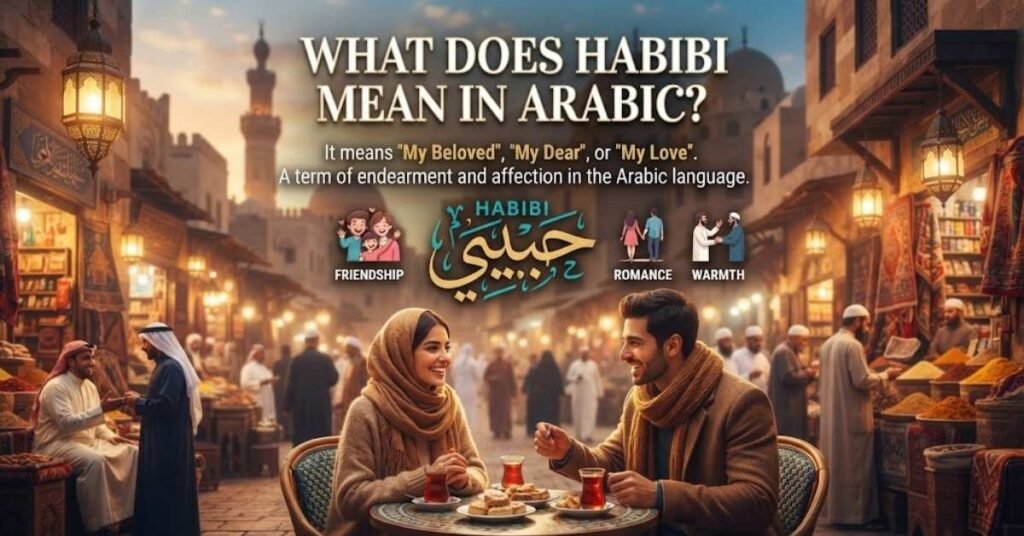
Habibi means “my love” or “my dear” in Arabic. It comes from the Arabic root word habib, which means “beloved” or “dear one,” plus a small -i suffix that turns it into something more personal.
Here’s the part people miss though. Habibi doesn’t always point to romance. Friends use it. Family uses it. Even strangers use it when they’re being warm or polite. The tone and situation decide what it really means.
What Does Habibi Mean in Arabic?
In everyday Arabic-speaking cultures, habibi carries real feeling behind it. It’s not a throwaway word. People use it to show closeness, respect, or plain old affection toward someone they care about.
The word traces back to habib (حبيب), meaning “beloved.” Add the ي sound at the end, and you get habibi (حبيبي), which literally means “my beloved.” Simple, but loaded with warmth.
You’ll hear it constantly across the Middle East. Parents say it to kids. Friends say it to friends. It’s less about romance and more about emotional expression in general.
Habibi Meaning in English
Translate habibi into English and you’ll land somewhere near “my love,” “my dear,” or “darling.” None of these hit it perfectly though. English just doesn’t have one word that carries the same mix of warmth and casual affection.
Think of it more like a flexible term of affection. Sometimes it’s romantic. Sometimes it’s just a friendly way to greet someone. Context does most of the heavy lifting here, not the word itself.
Is Habibi Romantic?
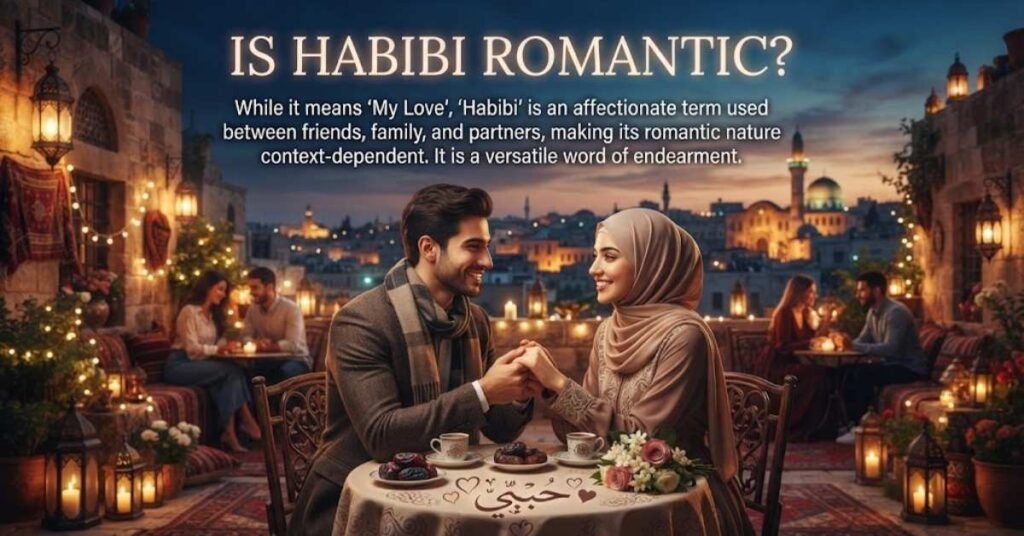
Sometimes, yes. If your partner texts “goodnight habibi,” that’s romantic, no question. But that’s only half the story.
A guy might call his best friend habibi after they haven’t talked in months. A mom might say it to her son at breakfast. None of that is romantic, it’s just love expressed in a casual, everyday way.
So before you read too much into it, look at who’s saying it and how. A quick “hey habibi” from a coworker probably means nothing more than “hey friend.”
Habibi Meaning in Text Messages
Texting changes the tone a bit. In chats, habibi often shows up as a soft, affectionate close. Think “miss you habibi,” “thanks habibi,” or just “my habibi” dropped into a casual message.
You’ll also spot spelling variations like habibii or habiby. These aren’t mistakes exactly, they’re just informal, playful spellings people use in fast typing or when they want extra emphasis.
Emojis usually ride along too. A heart, a smiley, maybe a kiss emoji. These little touches help set the tone since text alone can’t carry vocal warmth.
What Does Habibi Mean on TikTok?
TikTok took habibi and ran with it. You’ll see it in captions, comments, and audio clips, often paired with humor rather than deep romance. It’s become part of internet slang now, almost a meme in its own right.
Sometimes it’s used sincerely, like commenting habibi under a friend’s post. Other times it’s a joke, especially in travel humor videos or reaction clips where people mimic Middle Eastern greetings for laughs.
Either way, it’s helped push the word into online communities far outside its original Arabic-speaking roots. That’s cultural exchange happening in real time, one video at a time.
What Is the Difference Between Habibi and Habibti?
This one trips people up constantly. Habibi is the masculine form, used when speaking to a man or boy. Habibti (حبيبتي) is the feminine form, used for a woman or girl.
So if you’re texting your girlfriend, habibti is technically correct. If you’re texting a guy friend, habibi fits. Mixing them up isn’t a huge deal among casual speakers, but it does show you’re still learning the gender-based words in Arabic.
Native speakers notice the difference right away. It’s a small detail, but getting it right shows you actually understand the Arabic language, not just the trend.
How Do You Pronounce Habibi?
Pronunciation is easier than it looks. Say it like “Ha-BEE-bee,” with the stress landing on that middle syllable. The “h” sound is soft, breathed out rather than harsh.
English speakers sometimes flatten it, but Arabic gives it a gentle push from the throat. Practice saying it slowly first, then speed up once it feels natural on your tongue.
If you’re ever unsure, listen to how it sounds in Arabic songs or shows. That’s honestly one of the fastest ways to nail the Arabic pronunciation without overthinking grammar rules.
Is Habibi a Slang Word?
Not exactly, though it’s often treated that way outside Arabic-speaking countries. Within Arabic itself, habibi is a genuine, well-established term of affection, not slang.
Where it becomes slang is when non-Arabic speakers borrow it for casual, meme-style use online. That’s a borrowed expression at that point, shaped by modern language use rather than tradition.
Both uses are valid in their own space. Just know the difference between using it respectfully and using it as a joke, since the two carry very different weight.
Can Friends Say Habibi?
Absolutely. This might be the most common use of the word, honestly. Friends toss it around constantly, especially close male friends, without a hint of romance involved.
It works like calling someone “buddy” or “my dude” in English, just warmer. A group chat full of friends might be packed with habibi, and nobody thinks twice about it.
So no, saying habibi to your friend doesn’t mean anything’s changed between you two. It’s just how friendship gets expressed in Arabic culture, plain and simple.
What Does Habibi Mean From a Girl?
When a girl says habibi to you, context still rules everything. If she’s your girlfriend, it likely carries romantic meaning. If she’s a friend, it’s probably just a friendly meaning, similar to saying “hey love” casually.
Cultural background matters too. Girls from Arabic-speaking families often grow up using habibi with siblings, cousins, and friends. It’s baked into daily speech, not saved for special romantic moments.
If you’re unsure, look at the bigger picture. One word rarely tells the whole story, but the surrounding conversation usually does.
What Does Habibi Mean From a Guy?
Same logic applies here. A guy calling another guy habibi is common and completely platonic, especially in Arab communities where close male friendship often sounds more affectionate than in English.
If a guy says it to a woman he’s interested in, though, it can lean romantic fast. Tone, timing, and how often he says it all shift the meaning.
Basically, don’t assume. Read the relationship first, then decide what the word is really carrying.
Is Habibi Used Only by Arabs?
Not anymore. While it started firmly within Arabic-speaking cultures, the word has spread wide thanks to Arabic music, movies, travel, and social media. People across different backgrounds use it now, sometimes without knowing its full origin.
This kind of spread isn’t unusual. Words travel when culture travels, and Arabic pop songs alone have introduced habibi to millions of listeners worldwide.
That said, using it respectfully still matters. Understanding where it comes from adds meaning instead of treating it like just another trendy phrase.
Common Habibi Phrases
Habibi rarely stands alone. It often pairs with other everyday Arabic words to form quick, warm expressions people use constantly.
Yalla Habibi
Yalla means “let’s go” or “come on.” Pair it with habibi and you get a playful nudge, like “come on, my love” or “let’s go, friend.” You’ll hear this constantly in casual conversations and music.
Shukran Habibi
Shukran means “thank you.” So shukran habibi translates loosely to “thanks, my dear.” It’s a warm way to show gratitude, often used between close friends or family.
Ahlan Habibi
Ahlan means “hello.” Ahlan habibi works as a friendly greeting, similar to saying “hey there, friend” in English. It’s casual, welcoming, and used constantly in daily chats.
Good Morning Habibi
This one’s straightforward but sweet. Saying “good morning habibi” adds a personal touch to a simple greeting, often used between partners, close friends, or family first thing in the day.
Is Habibi a Bad Word?
Not at all. Habibi is a positive, affectionate word with zero negative meaning built in. Any awkwardness comes from misuse, not the word itself.
Problems only pop up when it’s used to make someone uncomfortable, like a stranger using it inappropriately. Even then, it’s the intent causing issues, not the word’s actual meaning.
Used correctly, habibi is warm, respectful, and genuinely kind. There’s nothing rude baked into it at all.
Common Mistakes With Habibi
A few misunderstandings keep popping up around this word. Let’s clear those up too.
Thinking Habibi Always Means Lover
This is the biggest one. People assume habibi only applies to romantic partners, but as we’ve covered, that’s just not true. Context decides the meaning far more than the word itself does.
Using Habibi Without Understanding Context
Tossing habibi into conversation without reading the room can feel off, especially with someone you barely know. It’s best saved for people you actually share warmth with.
Confusing Habibi and Habibti
Mixing up the masculine form and feminine form is common among learners. It’s a small slip, but native speakers will notice, so it’s worth practicing the difference.
Translating It Too Literally
Habibi doesn’t map perfectly onto any single English word. Treating it as an exact match for “boyfriend” or “girlfriend” misses the bigger cultural picture entirely.
Habibi vs Honey vs Darling
English has similar affectionate nicknames like honey, darling, or sweetheart. These work as rough English equivalent terms, but none capture habibi’s full range.
Honey and darling usually stay romantic or family focused in English. Habibi stretches further, covering friendship, family, and romance all under one word, depending purely on tone.
So while comparisons help beginners understand the vibe, habibi really is its own thing, shaped by Arabic language and culture rather than a direct swap with English pet names.
Conclusion
Habibi is simple on the surface but rich underneath. At its core, it means “my love” or “my dear,” rooted in the Arabic word for beloved. Yet its real meaning shifts with every conversation it’s part of.Friends use it. Family uses it. Partners use it. Even the internet has picked it up, spreading it far beyond its original roots.
The word survives because it’s flexible, warm, and genuinely useful for expressing care without overthinking it.Next time you hear habibi, you’ll know exactly what’s going on. Context is everything, and now you’ve got the full picture.
FAQs
What does habibi mean?
Habibi means “my love” or “my dear” in Arabic, coming from the word habib, meaning beloved.
Is habibi romantic?
It can be, but it’s often just friendly or familial depending on who’s saying it and why.
What does habibi mean from a guy?
Usually platonic between male friends, though it can turn romantic depending on the relationship and tone.
What does habibi mean from a girl?
Same rule applies. It’s romantic with a partner, friendly with everyone else.
What is the female version of habibi?
Habibti is the feminine form, used when speaking to a woman or girl.
Is habibi a slang word?
Not in Arabic, where it’s a genuine term of affection. It’s treated more like slang when borrowed casually online.
What does yalla habibi mean?
It translates loosely to “come on, my love” or “let’s go, friend,” used as a playful nudge in conversation.

Arthur Whitmore is a passionate grammar enthusiast and language writer at Hexobrust.com. He creates clear, helpful content on grammar, spelling, and everyday English to make learning simple and enjoyable.
