


Ever typed “coachs” and felt something was off? You’re not alone, and your gut was right.Coaches is the correct spelling of the plural of coach. Coachs is a spelling mistake that no standard dictionary accepts.
It looks fine at a glance, which is why so many writers miss it.In this guide, you’ll see why the -es ending matters. You’ll also get a simple memory trick, real examples, and quick fixes for themost common mistakes. Ready to make this one stick for good?
Quick Answer
Coaches is the correct spelling. Coachs is an incorrect spelling and no standard dictionary lists it.
You add -es to coach because the word ends in -ch. So the plural of coach is always coaches, and the same form works as the verb too.
Worried you’ve typed “coachs” in an email already? Don’t sweat it, because it’s one of the most common spelling mistakes in English usage.
Why People Confuse Them
Most of us learn early that you add an -s ending to make a plural form. It works for dogs, cars, and books, so your brain runs the same script on coach.
The problem is that English grammar rules don’t stay that simple. Words that end in a hissing or buzzing sound need extra help.
Try saying “coachs” out loud. It’s clunky, right? Your mouth wants that extra syllable, and the es ending gives it one.
Key Differences at a Glance
Here’s the fast comparison if you’re skimming between meetings.
- Coaches: correct plural of coach, also the third-person singular verb form
- Coachs: misspelling, not accepted by English dictionaries
- Pronunciation: coaches sounds like “COH-chiz”, while coachs has no natural sound
- Spell-checkers: they flag coachs with a red squiggle almost every time
Bookmark this list if you write a lot. It saves you from second-guessing yourself at 5 PM on a Friday.
Meaning and Usage Difference
Only one of these words carries any meaning. That makes this word confusion easy to settle once you see the split.
Coaches
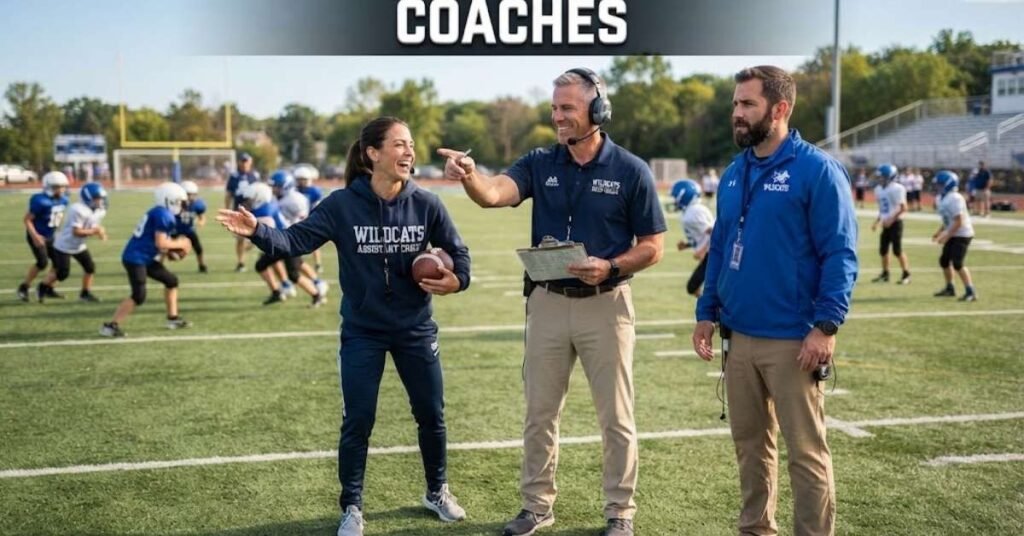
Coaches does two jobs. As a noun, it means more than one person who trains others, like football coaches or life coaches.
As a verb, it describes what one person does. For example, “She coaches the debate team every Tuesday.”
It can also mean long-distance buses or railway carriages, though that use is less common today.
Coachs

Coachs has no meaning in standard English. It’s just a grammar mistake that looks plausible.
If you see it in a draft, treat it as a typo pattern. Swap it for coaches and move on.
Tone, Context, and Formality
Good news here. The correct grammar doesn’t change with the setting. Coaches works in every context, while coachs never works anywhere.
What changes is how much a mistake costs you. Let’s walk through it.
Formal Writing
In formal writing, one slip can undercut your credibility. Readers may assume you rushed the piece.
Use coaches in letters, official documents, and official communication without exception.
Casual Writing
Casual writing gives you more room for slang and short forms. Even so, coachs still looks like an error.
A text to a friend won’t ruin anything. But you’ll look sharper with the right form.
Academic Writing
In academic writing, accuracy matters as much as ideas. Markers notice misspelling fast, especially in research papers.
Say a paper studies academic coaches or debate coaches. One wrong plural in the abstract can make a reader doubt your care.
Business Writing
Business writing needs to feel clean and confident. Resumes, reports, and proposals all fall under this.
Picture a hiring manager reading “certified coachs” on your CV. That tiny slip can cost you an interview.
American English Usage
In American English, the rule is identical to British English. There’s no regional split, so you can’t blame your spelling on geography.
American English usage treats coaches as the only plural. That’s true in the U.S., the UK, Canada, and Australia.
Which One Should You Use?
Use coaches. Every time, in every setting, with no exceptions.
Nobody’s arguing over this in the language rules world. The debate ended long ago.
Easy Memory Trick
Think of churches, beaches, and benches. They all end in -ch, and they all take -es.
If you’d never write “churchs,” you shouldn’t write “coachs.” Same spelling pattern, same fix.
When One Choice Sounds Wrong
Read this sentence aloud: “The team has three coachs.” It trips your tongue, doesn’t it?
Now try “The team has three coaches.” It flows because the extra syllable matches how we speak.
That’s a handy proofreading test. If a plural feels awkward to say, check whether it needs an -es ending.
Why English Adds -es to Some Nouns
Here’s the spelling rule behind it all. Nouns ending in -ch, -sh, -s, -x, and -z usually take -es.
That’s why we write boxes, buses, and wishes. The extra letter keeps the word easy to say.
There’s one twist. When -ch sounds like a K, as in “stomach” or “monarch,” you just add -s. That’s the only place coachs could feel logical, but coach doesn’t use the K sound.
Common Mistakes (and Quick Fixes)
Let’s look at the common mistakes people make with this word. Each one has a simple fix.
Mistake 1
Writing “coachs” as the plural. It happens when you type fast and trust habit.
Fix it by adding -es. Coaches, done.
Mistake 2
Using “coach’s” for a plural. The apostrophe shows possession, not more than one.
Write “the coach’s whistle” for one person’s whistle. Write “the coaches’ meeting” for a group’s meeting.
Mistake 3
Writing “coaches” for one person in a verb slot. For instance, “He coach the team” is missing its ending.
Use “He coaches the team.” The third-person singular verb in present tense needs that -es.
Mistake 4
Trusting a spell-checker blindly. Some tools miss context, especially in social captions and chat apps.
Do a quick read before you hit send. Slow down for two seconds and catch the slip.
Mistake 5
Mixing up “coaches” and “coaching.” They’re related, but they aren’t interchangeable.
“Coaching” is the activity or the process. “Coaches” are the people, or the verb form for one person doing it.
Everyday Examples
Seeing the word in real settings makes it stick. Here are simple sentence examples you can borrow.
School
“The volunteer coaches at our youth sports camp start practice at 7 AM.” Notice the plural fits neatly.
“Our science club coaches helped us prep for the fair.”
Work
“Our company coaches run workplace coaching sessions each month.” That’s a typical HR line.
“She coaches new managers on leadership training.”
Home
“My kids have two swim coaches this summer.” Parents write versions of this all the time.
“Dad coaches my little brother’s soccer team.”
Business
“Our business coaches support business professionals during growth phases.” It reads clean and confident.
“We hire executive coaches for senior teams.”
Emails
“Hi team, the head coaches will join Thursday’s call.” Short, clear, correct.
Double check plurals in your subject line. It’s the first thing people read.
Social Media
“Huge thanks to our assistant coaches for a great season!” That caption looks polished.
A typo in a public post sticks around. Readers screenshot mistakes faster than you’d think.
Everyday Conversations
Spoken English hides this mistake because you never see the spelling. You just say “coaches” naturally.
It only shows up once you type it. That’s why so many writers slip.
Dictionary-Style Word Details
Here’s a quick, dictionary entry style breakdown. It shows how one word can play two roles.
Verb
Coach as a verb means to train, guide, or instruct someone. For example, “She coaches beginners in tennis.”
Forms include coach, coaches, coached, and coaching. The -es appears in the third-person singular.
Noun
Coach as a noun means a person who trains others. It can also mean a bus or a railway carriage.
The plural is coaches. You’ll see it in phrases like sports coach, life coach, and career coach.
Synonyms
Word choice matters if you want to avoid repeating yourself. These options help you vary your writing.
Synonyms for Coach
Try trainer, instructor, mentor, teacher, guide, advisor, tutor, consultant, or facilitator. Each has a slightly different flavor.
A driving instructor isn’t quite a mentor, for instance. Pick the one that matches the situation.
Antonyms
There’s no perfect opposite. Still, student, learner, beginner, and trainee sit on the other side of the relationship.
They’re the people being coached, not the ones coaching.
Synonyms for Coachs
Coachs isn’t a real word, so it has no synonyms. Use the synonyms for coaches instead.
That means trainers, instructors, mentors, and tutors.
Correct Examples with Coaches
- “The football coaches reviewed film after practice.”
- “Two certified coaches led the workshop.”
- “Our career coaches helped me polish my resume.”
Incorrect Examples with Coachs
- “The basketball coachs arrived early.” (Should be coaches)
- “We hired three life coachs.” (Should be coaches)
- “Our head coachs will speak next.” (Should be coaches)
Word History
The story behind coach is more fun than you’d expect. The word origin traces back to Kocs, a Hungarian village known for building fast carts.
Those carts became a famous horse-drawn carriage style in Europe. Languages borrowed the name, and English shaped it into coach.
Later, students used the word for a tutor who “carried” them through exams. Over time, the etymology of coach shifted into sports and business, which shows real language evolution at work.
Phrases Containing Coaches
You’ll spot the word in plenty of everyday phrases. Here are the ones people search for most.
- Head coaches and assistant coaches for team leadership
- Football coaches, basketball coaches, soccer coaches, baseball coaches, and tennis coaches
- Swimming coaches and athletic coaches for training programs
- Leadership coaches, executive coaches, health coaches, and life coaches in personal growth
- Professional coaches and team coaches in business settings
Notice how every phrase keeps the -es. That’s your clue the pattern holds everywhere.
Why Writing Accuracy Builds Trust
Small spelling differences shape how people judge you. Readers rarely say it aloud, but they notice.
Good writing accuracy shows respect for your audience. It boosts writing confidence and keeps your polished writing on point.
Think of proofreading as a five-minute habit that pays off. It supports clear communication and strengthens your communication skills over time.
Tips for English Learners and Native Speakers
English learners often apply the -s rule too strictly, which leads to coachs. That’s normal, and it isn’t a sign of weak skills.
Native speakers slip too, mostly when typing fast. The brain autocompletes patterns without checking them.
Build a tiny checklist for nouns ending in -ch. Add churches, beaches, and benches to a note on your phone.
Conclusion
The answer is simple. Coaches is correct, and coachs is a misspelling.Remember the -ch rule and you’ll never miss again. It also covers boxes, buses, and wishes.
Which spelling mistake trips you up the most? Drop it in the comments and share this guide with a friend who writes a lot.
FAQs
Which spelling is correct: coaches or coachs?
Coaches is correct. Coachs is a spelling mistake.
Why does coach become coaches instead of coachs?
Nouns ending in -ch take -es because the extra syllable helps pronunciation. It’s the same reason churches and benches follow the pattern.
Does any dictionary accept coachs?
No standard dictionary lists it. Dictionary acceptance stops at coaches.
Why do people write coachs?
They apply the basic -s ending rule without thinking. Fast typing makes it worse.
How can I remember the correct spelling?
Link it to churches and beaches. If those need -es, coach does too.
Will readers notice the difference?
Yes, especially in formal and professional writing. A clean plural quietly builds trust.

Arthur Whitmore is a passionate grammar enthusiast and language writer at Hexobrust.com. He creates clear, helpful content on grammar, spelling, and everyday English to make learning simple and enjoyable.
