

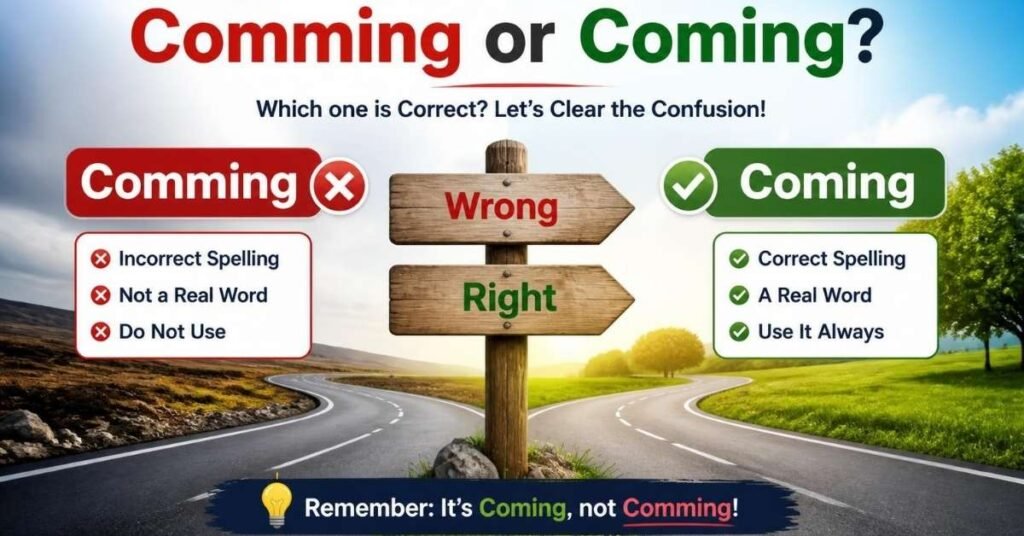
Have you ever typed a word and stopped because you weren’t sure if the spelling looked right? Many writers get stuck between coming and a commonly confused version because both forms appear similar at first glance. A single extra letter can turn a correct sentence into a noticeable spelling mistake.
The correct choice is simple: coming is the right spelling. The word follows English spelling rules and comes from the base word “come.” Once you understand why the silent “e” disappears instead of doubling the “m,” this mistake becomes easy to avoid. Whether you are writing a quick message, a professional email, or an important document, using the correct spelling helps your writing look clear, confident, and polished.
Quick Answer
The correct spelling is coming. The word comming is a common misspelling and does not follow standard English spelling rules.
You should use coming in every situation, including text messages, business emails, and formal writing.
The word coming comes from the base word come. When you add “-ing,” the silent “e” disappears:
- Come → Coming ✅
- Comming ❌
Example:
Correct:
- “I’m coming home after work.”
- “The new update is coming soon.”
Incorrect:
- “I’m comming home after work.”
Many people write comming because they remember words like:
- Run → Running
- Swim → Swimming
- Sit → Sitting
However, come follows the silent “e” rule, not the consonant doubling pattern.
Why People Confuse Them

The confusion between coming and comming happens because English spelling rules can feel unpredictable.
Some verbs double their final consonant before adding “-ing.” For example:
- Run → Running
- Swim → Swimming
- Sit → Sitting
Because of this pattern, some writers think come should become comming. However, that spelling is incorrect.
The correct rule is different. The word come ends with a silent “e,” so you remove the “e” before adding “-ing.”
Examples:
- Make → Making
- Write → Writing
- Come → Coming
Conversation example:
Person A: “Is it spelled comming or coming?”
Person B: “It’s coming. The silent ‘e’ drops, but the ‘m’ doesn’t double.”
Pronunciation also creates confusion because both spellings sound almost identical when people speak quickly.
Key Differences At A Glance
Understanding the difference between coming and comming becomes easier when you compare their spelling, meaning, and usage.
| Feature | Coming | Comming |
| Correct spelling | ✅ Yes | ❌ No |
| Standard English word | Yes | No |
| Dictionary entry | Yes | Usually listed as a mistake |
| Verb form | Present participle of come | Not a valid verb form |
| Professional writing | Accepted | Avoid |
| Common usage | Everyday English | Typing mistake |
The word coming works in many situations, including:
- Social media posts
- Online messaging
- Academic writing
- Reports
- Presentations
The spelling comming does not have a separate meaning. It is simply a misspelling of coming.
Meaning And Usage Difference
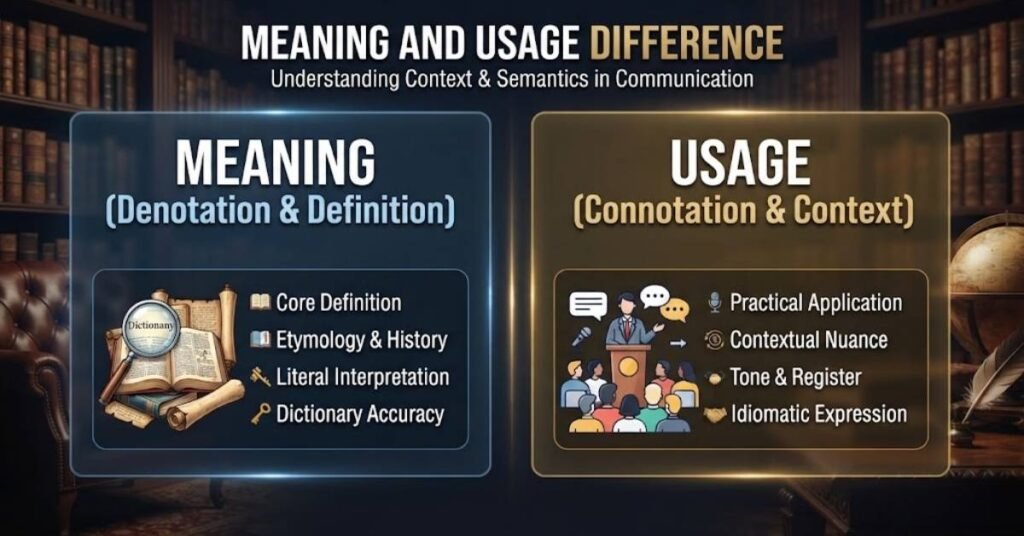
The word coming is the present participle and gerund form of the verb come.
It describes someone or something moving closer, arriving, or happening in the future.
Common meanings include:
- Approaching
- Arriving
- Upcoming
- Nearing
Examples:
- “The train is coming.”
- “A new season is coming soon.”
- “She is coming to the party tonight.”
The word coming can also have noun usage in certain phrases:
- The coming year
- The coming of spring
- The coming of age
However, comming has no recognized meaning in English. It does not function as a noun, verb, or adjective.
Example conversation:
Person A: “What does comming mean?”
Person B: “It doesn’t have a meaning. It’s just the wrong spelling of coming.”
The correct pronunciation of coming sounds like “KUM-ing.”
Tone, Context, And Formality
The word coming fits naturally in almost every type of communication.
You can use it in casual conversations, professional writing, and online communication without any problem.
Examples of places where coming is correct:
- Text messages
- Business emails
- Social media posts
- Journalism
- Marketing content
- Resumes
- Reports
- Presentations
Examples:
Casual:
- “I’m coming over tonight.”
Professional:
- “The report is coming next week.”
Marketing:
- “A new collection is coming soon.”
Using comming in formal writing can make your work look rushed or unedited.
For example:
❌ “Our new product is comming soon.”
✅ “Our new product is coming soon.”
Whether you write a message to a friend or prepare a professional document, always choose coming.
Which One Should You Use?
You should always use coming. There is no standard English situation where comming is correct.
A simple memory trick can help you remember the spelling:
Start with the base word:
Come
Remove the silent “e”:
Com
Add “-ing”:
Coming
The final result keeps one “m.”
You can also remember it this way:
- Run needs double letters → Running
- Swim needs double letters → Swimming
- Come drops “e” → Coming
Common phrases with the correct spelling include:
- Coming soon
- Coming home
- What’s coming next
- Saw it coming
The opposite ideas of coming include:
- Leaving
- Departing
- Going
So whenever you hesitate between coming or comming, choose coming. It is the only accepted spelling in modern English.
When One Choice Sounds Wrong
When people see comming and coming, the mistake often looks obvious to experienced English readers.
The spelling comming feels unusual because it does not match normal English spelling patterns. Most readers immediately recognize it as a misspelling.
The correct word coming appears everywhere:
- Books
- Websites
- Emails
- Messages
- News articles
For example:
✅ “The meeting is coming soon.”
❌ “The meeting is comming soon.”
The two words sound almost the same when spoken quickly. However, English spelling depends on rules, not only pronunciation.
Conversation example:
Person A: “Why does comming look wrong?”
Person B: “Because English uses coming with one ‘m’ after removing the silent e from come.”
The word coming follows the silent “e” rule. The base word come loses the final “e” before adding “-ing.”
Common Mistakes (And Quick Fixes)
Many writers make the comming mistake because they apply the wrong spelling pattern.
English has many confusing rules. Some words double letters, while others remove letters.
The easiest fix is to remember the original verb:
- Come → Coming
- Not Come → Comming
Common mistakes include:
- Adding an extra “m”
- Writing based on sound
- Applying consonant doubling incorrectly
Quick fixes:
- Check the base word first.
- Look for a silent “e.”
- Learn common spelling patterns.
When you are unsure, compare it with similar words:
- Make → Making
- Write → Writing
- Come → Coming
These examples show that the silent “e” disappears instead of creating a double consonant.
Doubling The Wrong Letter
One common reason people write comming is because they remember the consonant doubling pattern.
Some English verbs double their final consonant before adding “-ing.”
Examples:
- Run → Running
- Swim → Swimming
- Sit → Sitting
These words follow a different rule.
However, come does not double the “m.” The correct spelling is:
- Come → Coming ✅
- Come → Comming ❌
The mistake happens when writers think every short verb needs a doubled letter.
Example:
Wrong:
- “She is comming to my house.”
Correct:
- “She is coming to my house.”
A simple trick helps:
If the word ends with a silent “e,” remove the “e” first. Then add “-ing.”
Following Sound Instead Of Spelling
Another reason people choose comming is that they spell words based on how they sound.
When people say “coming,” the pronunciation sounds like “kum-ing.” The missing “e” and soft sound can confuse new learners.
However, English spelling does not always follow pronunciation perfectly.
For example:
- Coming sounds simple but follows a spelling rule.
- Writing sounds different from its letters.
- Make loses the “e” when changed to making.
Conversation example:
Person A: “I wrote comming because it sounds like there are two m’s.”
Person B: “The sound can trick you. The correct spelling is coming.”
Learning the spelling pattern helps you avoid this mistake.
Misapplying The Consonant Rule
English learners often memorize one rule and apply it everywhere.
The consonant doubling rule works for some words:
- Run → Running
- Sit → Sitting
- Swim → Swimming
But it does not apply to every verb.
The word come follows the silent “e” rule instead:
- Come → Coming
The mistake:
❌ “Come becomes comming because the m sound is strong.”
The correct pattern:
✅ “Come loses e and becomes coming.”
Understanding different spelling rules makes your writing more accurate.
It also helps you avoid similar mistakes in academic writing, professional writing, and everyday communication.
Everyday Examples
The word coming appears often in daily conversations. You will see it in casual messages, professional updates, and online posts.
Here are some correct examples:
- “I’m coming home after dinner.”
- “The new movie is coming next month.”
- “A big change is coming soon.”
- “Nobody saw that surprise coming.”
- “What’s coming next?”
Incorrect examples:
- “I’m comming home now.”
- “The new update is comming tomorrow.”
You can use coming in different situations:
Text message:
- “I’m coming in five minutes.”
Business email:
- “The final report is coming on Friday.”
Social media post:
- “Something exciting is coming soon.”
The word can describe something arriving, approaching, or happening in the future.
Dictionary-Style Word Details
The word coming has several uses in English. It works as a verb form, noun, and part of common phrases.
The spelling comming does not have a dictionary meaning. It remains a spelling error.
Verb
As a verb form, coming is the present participle of come.
It shows movement toward a place or an event that will happen soon.
Examples:
- “She is coming to the office.”
- “The package is coming tomorrow.”
The word can also work as part of continuous verb structures:
- I am coming.
- They are coming.
- We were coming.
The spelling comming is not an accepted verb form in English.
Noun
The word coming can also have noun usage in certain expressions.
It often describes an arrival, beginning, or future event.
Examples:
- The coming year
- The coming of spring
- The coming of age
In these phrases, coming acts like a noun that describes something approaching or beginning.
The word comming cannot be used as a noun because it is not a recognized English word.
Synonyms
The word coming has several similar meanings depending on the sentence.
Common synonyms include:
- Approaching
- Arriving
- Upcoming
- Nearing
Examples:
- “The coming storm” = the approaching storm
- “The coming event” = the upcoming event
The opposite meanings include:
- Leaving
- Departing
- Going
Example:
- “She is coming home.”
- “She is leaving home.”
Example Sentences
Here are natural examples using coming:
- “The weekend is coming soon.”
- “Are you coming to the party?”
- “I knew that problem was coming.”
- “The coming year may bring new opportunities.”
- “She is coming home late tonight.”
Incorrect:
- “The weekend is comming soon.”
Correct:
- “The weekend is coming soon.”
Using the correct spelling makes your writing look cleaner and more professional.
Word History
The word coming comes from the verb come, which has a long history in English.
The word come developed from Old English and has Germanic language roots.
Over time, English spelling changed, but the connection between come and coming remained.
The spelling pattern follows the silent “e” rule that developed through English language changes.
The word comming does not have separate word history. It appeared as a common spelling mistake when writers incorrectly applied other spelling patterns.
Phrases Containing
The word coming appears in many common English phrases.
Popular examples include:
- Coming soon
- Coming home
- The coming year
- What’s coming next
- Saw it coming
- The coming of age
- The coming of spring
Examples:
- “A new product is coming soon.”
- “I’m finally coming home.”
- “Nobody saw that surprise coming.”
These phrases appear in conversations, marketing, journalism, and online messaging.
Whenever you use these expressions, remember the correct spelling is always coming, not comming.
Conclusion
Choosing the right spelling becomes easy when you know the rule behind it. When you compare comming or coming, always remember that coming is the correct form. The spelling comming is only a common mistake and does not follow standard English spelling rules.
If you ever feel unsure about comming or coming, check the base word “come.” The silent “e” drops, and the word becomes coming. This simple trick can help you avoid the same mistake in messages, emails, and formal writing. Using coming makes your writing look clear and professional. So, whenever you think about comming or coming, choose coming with confidence. The correct spelling is simple, and remembering it will make your English writing stronger.
FAQs
Is comming or coming the correct spelling?
Coming is correct, while comming is a misspelling. English spelling rules accept only coming.
Why do people write comming instead of coming?
People confuse comming or coming because some words use consonant doubling before adding ing.
Does comming have any meaning in English?
No, comming has no standard meaning. It is simply an incorrect spelling of the word coming.
How can I remember the spelling of coming?
Remember the base word come. Remove silent e, then add ing to create coming.
Can I use coming in formal writing?
Yes, coming works in professional writing, emails, reports, and academic content without any spelling concerns.

Arthur Whitmore is a passionate grammar enthusiast and language writer at Hexobrust.com. He creates clear, helpful content on grammar, spelling, and everyday English to make learning simple and enjoyable.
